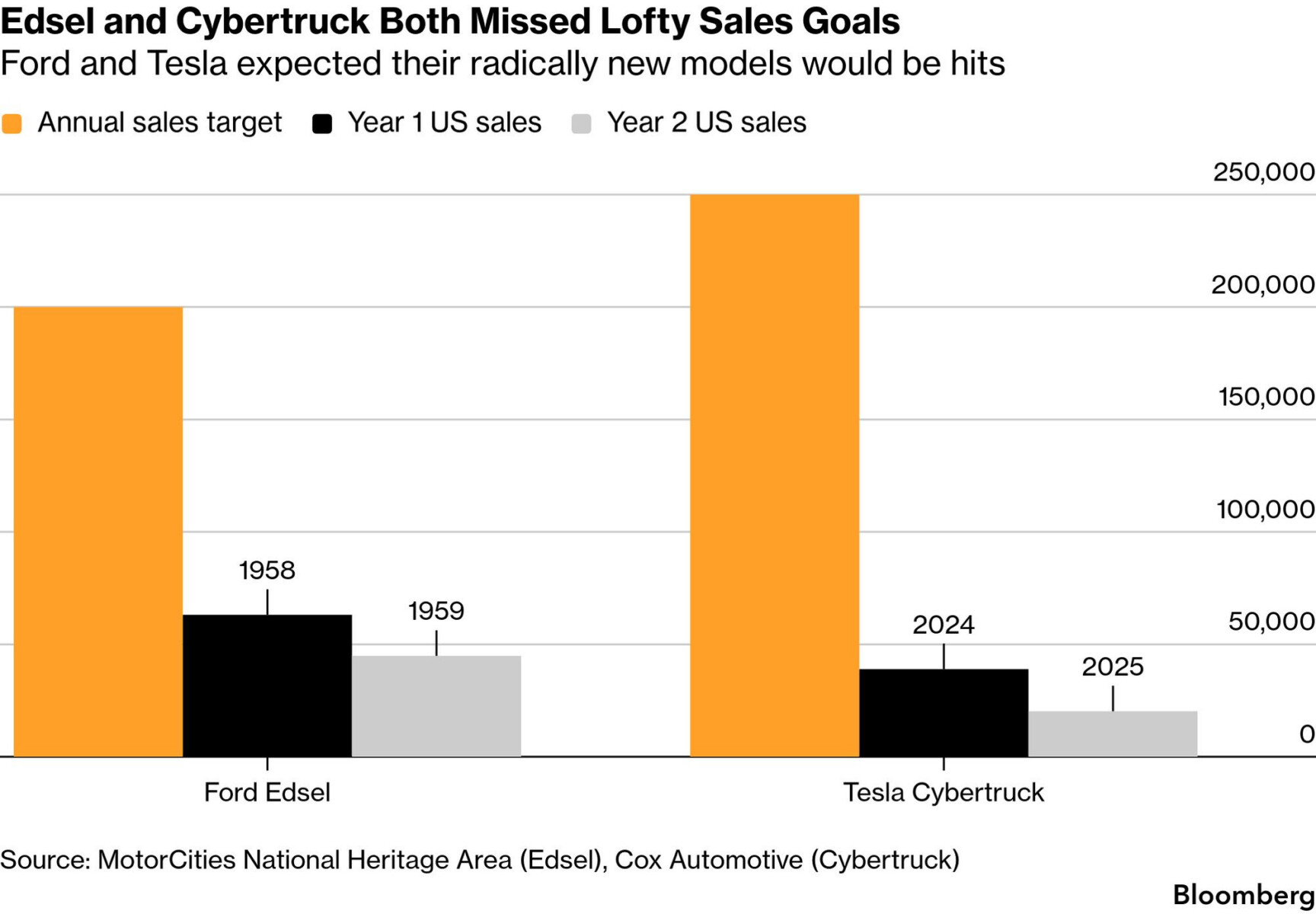
Bloomberg's recent analysis highlights the troubling comparisons between Tesla's Cybertruck and Ford's infamous Edsel, often seen as a symbol of commercial failure. While the Edsel, launched nearly 70 years ago, is celebrated for its poor sales performance, the Cybertruck's launch has also faltered significantly.
Initial Challenges and Consumer Reception
Tesla's much-anticipated Cybertruck began deliveries in 2023, with CEO Elon Musk declaring it the company’s finest creation and projecting annual production of over 250,000 units. However, the initial reception has been tepid at best. Mixed reviews and skepticism from critics and consumers alike have marred its rollout, and it's clear that not everyone is captivated by its unconventional design.
As of May 2023, only about 7,133 Cybertrucks had received registrations in the U.S., illustrating a lack of consumer enthusiasm. This figure starkly contrasts Musk's ambitious expectations and further suffers in context against the backdrop of the relatively greater success of SpaceX's fleet using the Cybertruck as a prototype, only slightly boosting overall numbers. The general perception of the vehicle raises questions about its design appeal: is it too radical for mainstream consumers? The Edsel suffered similarly, marked by a critical disconnect between the product and market demands.
Production Hurdles and Customer Experience
The Cybertruck's production has been riddled with complications from its inception, including significant delays and recalls. These production issues have not only pushed back delivery timelines but have also cast doubts on Tesla's manufacturing prowess—something the company has actively sought to bolster. Issues like malfunctioning doors after crashes have prompted lawsuits against Tesla, eroding the hard-won reputation the brand has built as a pioneer in electric vehicles.
Pricing is another hurdle. With initial buyer pricing exceeding $100,000, the vehicle's sales trajectory is troubling. It echoes the Edsel’s fate, which consistently saw a decline in sales through its run; initial excitement fizzled as the realities of ownership set in. If this downward trend persists, the Cybertruck may well forever be linked to the historical narrative of the automotive industry's biggest misfires, just like the Edsel—once seen as a harbinger of innovation, now relegated to lessons in marketing blunders.
The Broader Context: Market Sentiment and Competition
The challenges facing the Cybertruck are not isolated incidents. They are symptomatic of larger issues within the automotive industry, particularly in the electric vehicle (EV) segment. Traditional automakers are ramping up their electric offerings, and consumer expectations are changing. Buyers are no longer just looking for an innovative design; they want reliability, value, and a brand they trust.
The competitive landscape is fierce. Rivals like Rivian and Ford with their F-150 Lightning have captured significant interest, often seen as more practical and consumer-friendly options. If you're working in this space, you'll recognize that consumer choice is shifting rapidly. Many potential buyers could be turned off by the Cybertruck’s polarizing design, opting instead for more conventional aesthetics that still offer the promise of EV technology.
Implications for Tesla and the Automotive Industry
This current predicament carries significant implications for Tesla. If the Cybertruck continues to underperform, it might not only impact Tesla's bottom line but also tarnish the brand's image as a leader in automotive innovation. Investors might react with skepticism, concerned that the company is losing its edge amid growing competition.
The fate of the Cybertruck also ignites discussions about consumer behavior. Are buyers looking for the next status symbol, or are they primarily concerned with practicality and efficiency? This is more significant than it looks. As the market evolves, Tesla must adapt to meet these changing consumer demands or risk becoming obsolete in an increasingly competitive environment.
And yet, the Cybertruck has its supporters who believe its unique design could eventually resonate with a specific segment of consumers. If successful, it could pave the way for more distinctive vehicles that challenge conventional aesthetics. That said, the hurdles are daunting. The clock is ticking, and early signs suggest that the enthusiasm may not hold steady.
What this means for you, whether you're an investor, consumer, or simply interested in the automotive world, is that the Cybertruck’s journey will be crucial to watch. Its performance and reception can impact not just Tesla but the broader electric vehicle market. Can a design so unapologetically bold succeed? Or will it fall into the annals of history, next to the Edsel, as a cautionary tale? Only time will tell.